

If you have any questions or would like to share something, feel free to join our Facebook group
Lyme disease can be challenging to diagnose accurately due to its wide range of symptoms and complex testing methods. In this guide, we'll explore the most reliable Lyme disease testing options, including blood tests, biofilm breakdown, and Dark Field Microscopy. You'll also learn how to accurately interpret the results to ensure a clear and trustworthy diagnosis, helping you or your healthcare provider make informed decisions for treatment.
Lyme disease, caused by the Borrelia bacteria, is a growing health concern that often goes undiagnosed due to inaccurate or insufficient testing methods. If you suspect that you have Lyme disease or have been exposed to it, proper preparation for testing is essential. This guide will provide you with crucial information on how to prepare your body for Lyme disease testing, increase the chances of an accurate diagnosis, and understand various testing methods like blood tests and microscopy. Whether you're just beginning your journey or looking for clarity in your diagnosis, this comprehensive resource is designed to help you navigate the complexities of Lyme disease testing.
How to Ensure Accurate Lyme Disease Blood Tests and Interpret Results Effectively
In chronic cases of Lyme disease (Borrelia), where the infection occurred a long time ago, the immune system may be suppressed, leading to consistently negative test results, regardless of the steps taken. To increase the likelihood of obtaining a positive test result if Borrelia is present, it is crucial to prepare the body.
The bacteria responsible for Lyme disease often protect themselves by creating biofilms, which shield them from both the immune system and external threats like antibiotics. These biofilms act as a defensive barrier, allowing the bacteria to evade detection. To achieve a positive result, breaking down these biofilms and promoting antibody production are necessary steps.
Another challenge with Lyme disease testing is that Borrelia bacteria may settle in areas of the body with poor blood circulation, such as joints, eyes, or nerve tissues. This further complicates detection, as the immune system and antibiotics may have limited access to these sites.
To improve the chances of obtaining a positive test result, two primary approaches can be taken:
Herbal Remedies, Vitamins, and Enzymes
The following protocol is commonly used to enhance the body’s response and increase the chances of detecting Borrelia:
- Herbs and supplements: Daily intake of immune‑stimulating herbs such as cat’s claw, echinacea, astragalus, and others. This should be used only after consulting a physician to ensure safety and optimal effectiveness.
- Vitamins: Vitamin C, vitamin D, selenium, and zinc are recommended for supporting the immune system (dosages must be discussed with a physician).
- Melatonin: When taken before sleep, melatonin helps improve sleep quality and supports the immune system in antibody production. Only after consulting a physician.
- Oregano oil in a technologically enhanced form (nanoformulation): These forms of oregano oil are considered more effective because regular essential oil has very low absorption in the body. If such an enhanced formula is not available, standard oregano oil may be used, but its intake must be done carefully and strictly according to the instructions of a physician or pharmacist to ensure safety and correct dosing. More information about the new scientifically improved technologies can be found in the article "Low‑budget production of oregano‑oil nanoformulations and evaluation of their effect on bacterial biofilm". If you are a beginner specialist or a student, the lessons on pharmacology of substances will be very useful for understanding how herbs and their molecules work.
- NAC (N‑acetylcysteine): This supplement should be taken on an empty stomach after consulting a physician.
- Monolaurin: Up to 3000 mg may be taken to support the immune system.
In addition, you can experiment with other approaches, including combining the following ingredients:
- Beta-glucanase, lipase, protease, and cellulase enzymes
- Botanical extracts: Cranberry, berberine, rosemary, and peppermint oil powder. (Reference)
Stay informed by researching credible sources to adapt your protocol as needed.
Antibiotics
Some people have found that taking antibiotics for unrelated reasons can disrupt Borrelia’s biofilms, leading to a positive test result later. There are cases where patients, previously negative for Lyme disease, received a positive result a month after completing a course of antibiotics.
In some cases, antibiotic treatment may lower the values in test results. However, based on the experiences of many individuals, there tends to be a greater number of positive results than reduced ones. Nevertheless, varying outcomes are possible.
Source: Zagorac GB, Kezele TG. Ceftriaxone and Doxycycline induced Seroconversion in Previously Seronegative Patient with Clinically Suspected Disseminated Lyme Disease: Case Report. Infect Chemother. 2021 Sep;53(3):582‑588. DOI: 10.3947/ic.2021.0008
Additional Scientific Approaches
The article “The Role of Exogenous Metabolic Precursors in Enhancing Humoral Immunity and Diagnostic Clarity” examines how optimizing specific biochemical modulators may prove to be the decisive factor in building a robust immune response against persistent infections. The text analyzes the theoretical potential of these fundamental resources to transform diagnostic ambiguity into definitive results by strengthening the natural production of antibodies. It offers a new perspective on the biological architecture of the body, in which precise defense depends directly on the availability of key cellular building blocks.
Another critical article on the topic has also been published: “Modulator of the Stromal–Immune Dialogue: Support Strategies in Immune Dysfunction.”
These two approaches, which are readily accessible to the general public, hold significant promise for effectiveness in Lyme disease screening, given the established benefits observed in other documented cases.
Combining Approaches
For optimal results, combining herbal remedies, vitamins, enzymes, oils, and colostrum with antibiotics may provide the best chance of obtaining an accurate test result. The preparation process generally takes around three to four weeks.
Achieving Optimal Test Results in Four to Five Weeks
Combining herbal remedies, vitamins, enzymes, and oils can enhance the accuracy of test results. The preparation process generally requires four to five weeks for optimal effectiveness.
Laboratory Considerations
When contacting a lab, it is crucial to ensure that they provide detailed test results, showing the specific “bands” on the Western blot test. If the lab only provides a simple positive or negative result without showing the bands, it may be an indication of a lack of professionalism. If uncertain, request to speak with someone knowledgeable about the testing procedure.
In some countries, you may not have direct access to your lab results, and the lab may send them only to your doctor. Ensure you understand the process and make sure the necessary information is available to you.
Western Blot Bands
When requesting “band visibility” on your test results, here’s what you should expect:
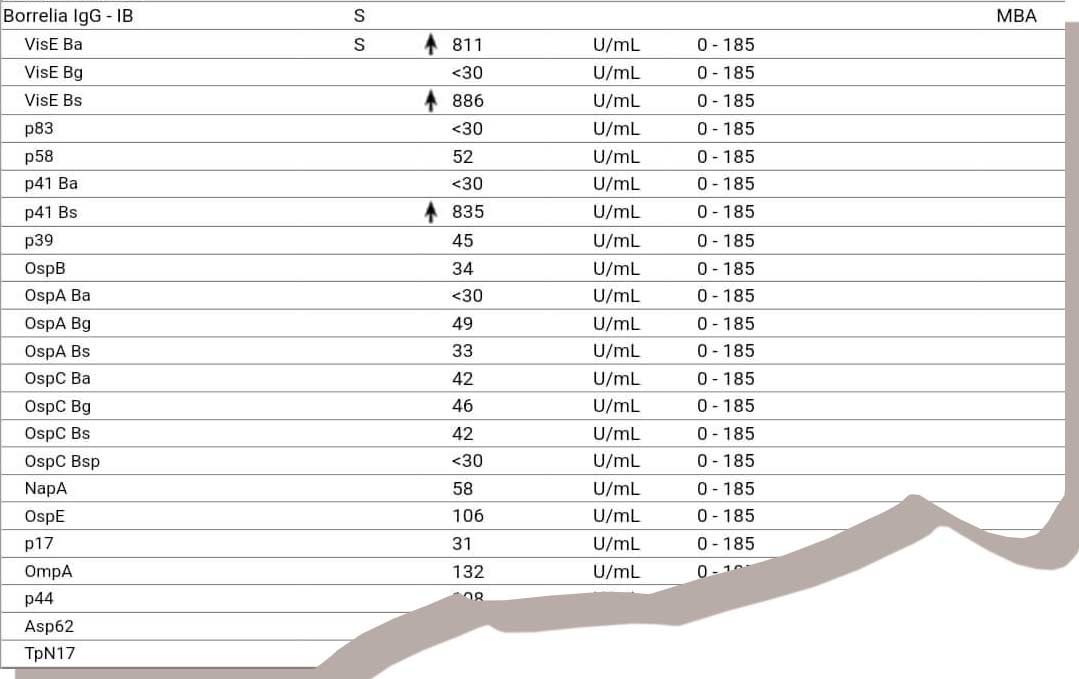
The test should display several rows with numbers and words. If the lab result only shows a single line marked as positive or negative, it’s best to avoid that lab in the future.
Example of a Negative Result
Here’s how a negative result should appear:
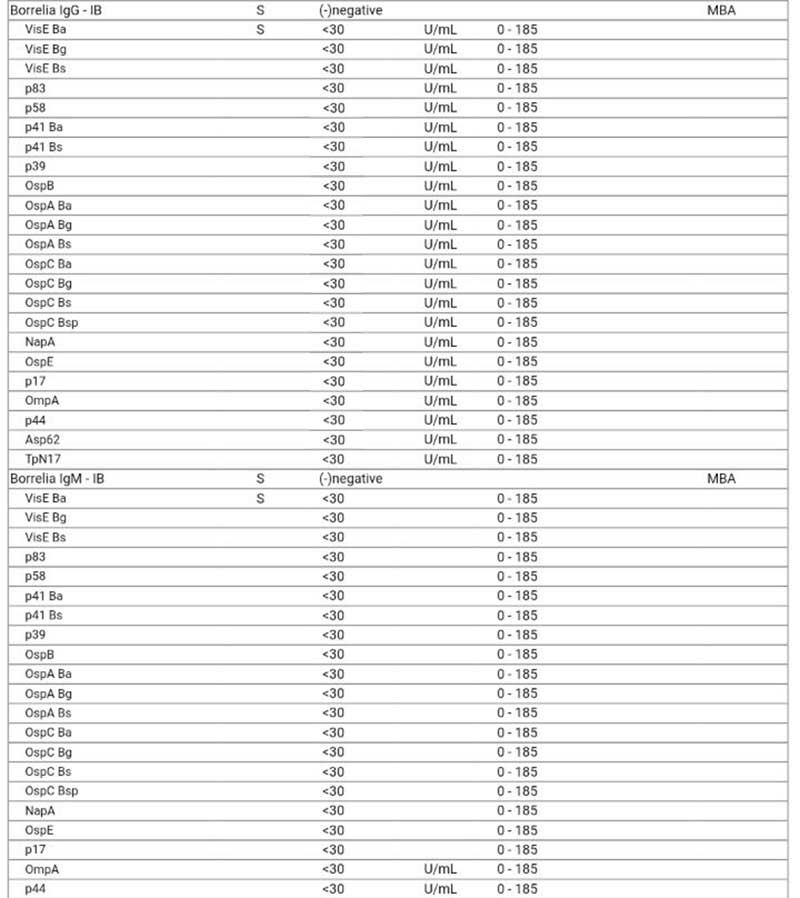
These test results use materials from TestLine Clinical Diagnostics s.r.o.
Examples of Patients with Negative Tests but Positive Bands
Below are two examples of patients with negative test results but evidence of Borrelia infection through band presence:
Graphic 1
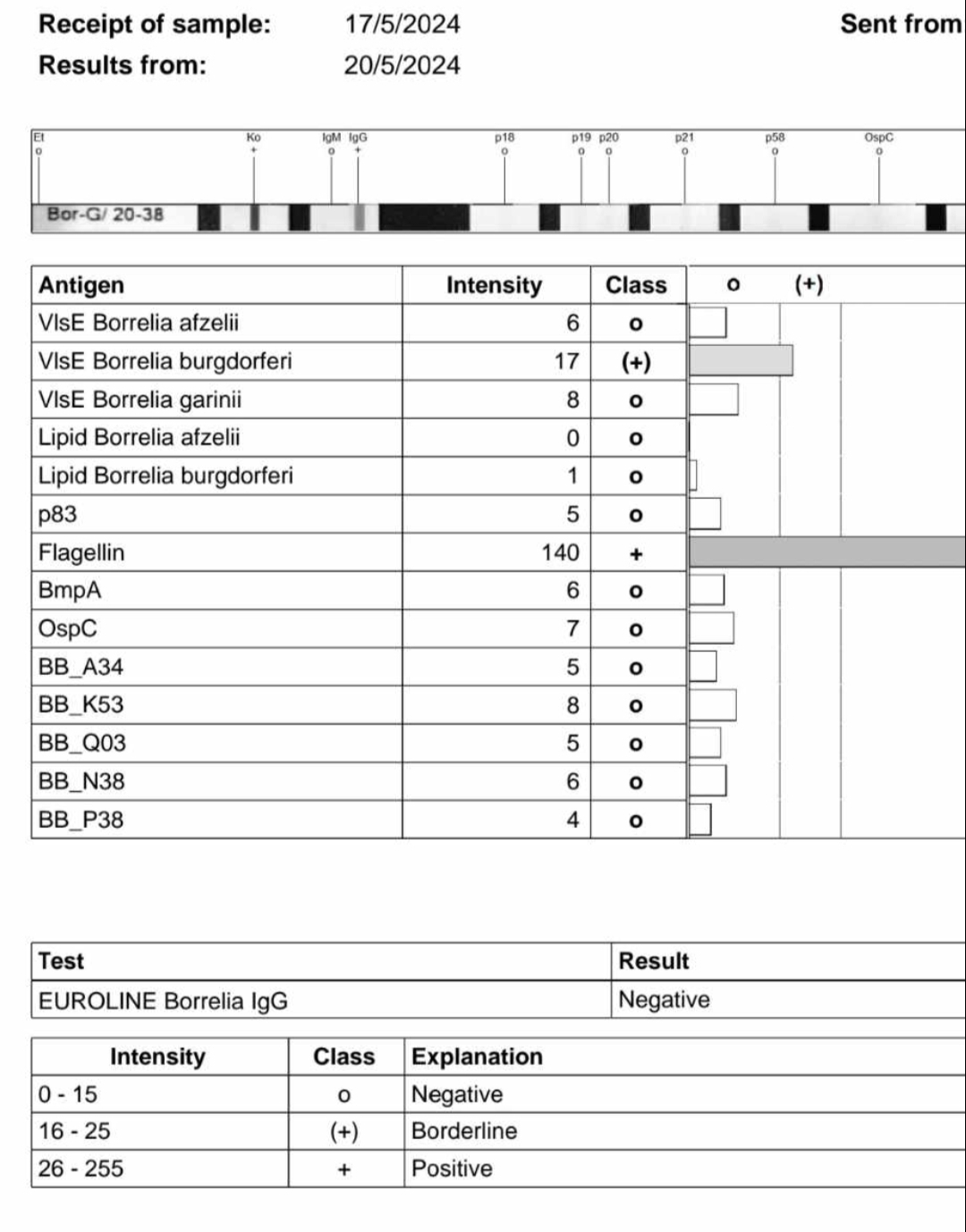
In the first example, the bands are labeled with strange numbers (Antigen column) and their intensity is shown numerically in the Intensity column. The Class column shows whether the band is interpreted as positive (+) or negative (0).
For example:
- The band labeled VIsE (line 2) extends into the positive (+) column.
- Line 7 (Flagellin) shows a very high intensity, representing band p41, which the medical system insists is not a criterion for Lyme diagnosis.
Despite these findings, the final result is marked as "Negative."
The patient, suffering from hip pain, underwent an unnecessary operation and later experienced weakness in all limbs. After consulting with foreign specialists, it was confirmed that the diagnosis of ALS was incorrect. Today, the patient’s condition has deteriorated significantly, yet the medical system has failed to provide adequate support.
Graphic 2
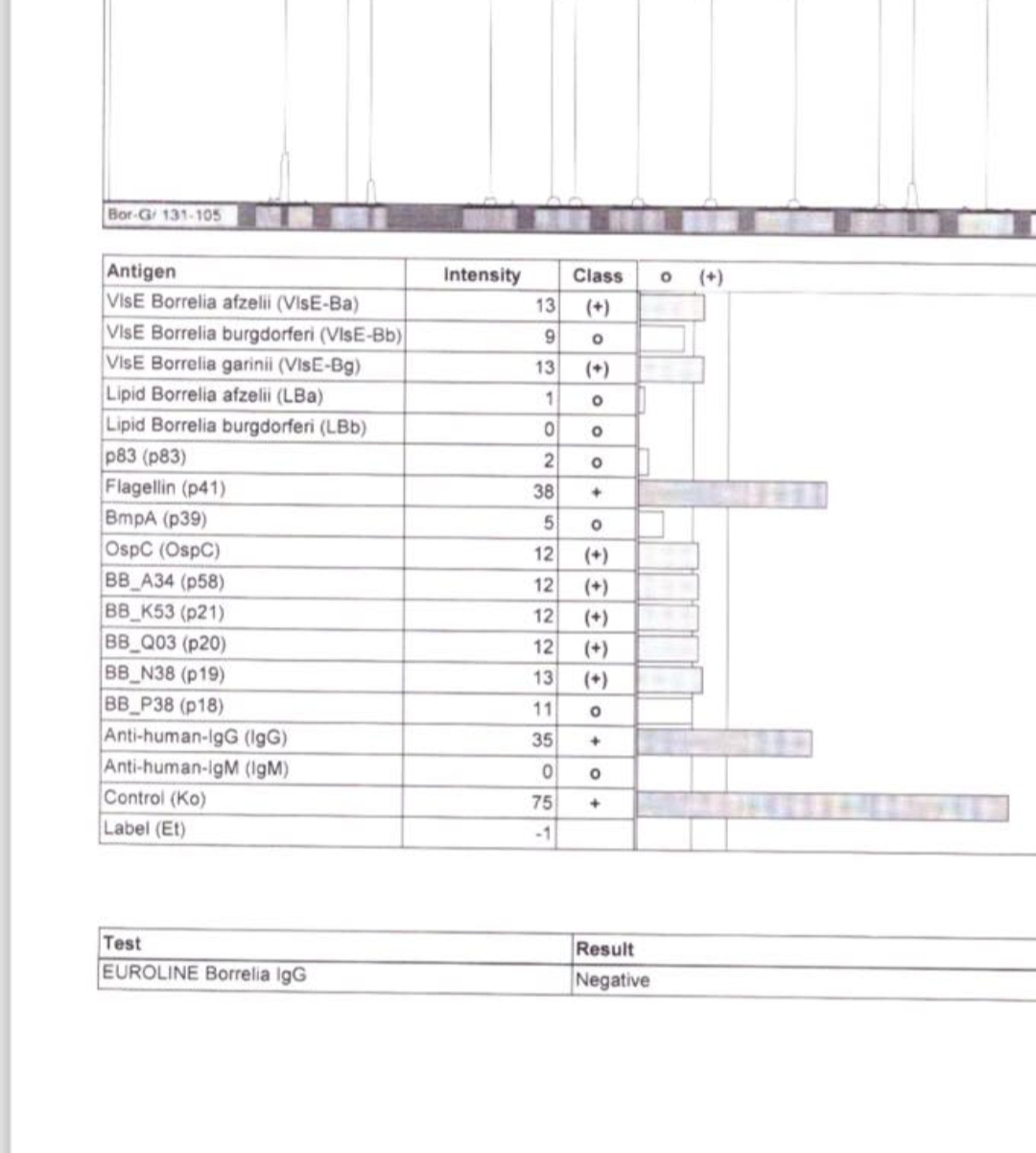
In this second example, many bands clearly extend into the positive (+) column. The laboratory has marked several bands with the + symbol, exceeding the five positive bands required for a diagnosis. Yet, the final result is still marked "Negative."
This patient suffers from unexplained symptoms, with their condition worsening over time. An infectious disease professor refused treatment.
Some patients may show more positive bands, while others may have fewer. Even one "borderline" result can be significant in diagnosing Lyme disease.
Conclusion on Western Blot Testing for Lyme Disease
It is crucial to personally review your Lyme test results, even if your doctor states that they are negative. Here’s why:
- Many general practitioners would consider the examples above as negative.
- A Lyme-literate doctor, however, would recognize them as positive based on symptoms.
- Specific bands (14, 18, 21, 22, 23, 24, 25, 28, 29, 31, 34, 39, 83-100) are Lyme-specific and cannot be caused by other bacteria. If even one of these bands is positive, it indicates Lyme exposure.
- The CDC requires five positive IgG bands or two positive IgM bands for a diagnosis, but in the Lyme community, one positive band can indicate infection.
- An IND (indeterminate) result is considered a weak positive.
- False-negative rates for Lyme tests can be as high as 50%. A negative result does not rule out Lyme disease.
- In some states, laws require doctors to inform patients that a negative Lyme test does not exclude the possibility of infection.
- Lyme disease often coexists with other infections, so co-infection testing is critical.
Accurate Lyme Disease Microscopic Testing
Microscopic observation has been used for decades to diagnose various infectious diseases in both humans and animals. Direct microscopic observation is fast, inexpensive, and reliable because the bacteria can be visually identified under a microscope.
However, the healthcare system has phased out this method for diagnosing Lyme disease, claiming it is uncertain whether the microbiologist is competent enough to make an accurate diagnosis. This has led to public manipulation, as direct microscopy remains a standard diagnostic tool for many diseases, particularly in veterinary medicine.
Borrelia bacteria have a distinctive shape that can be recognized under a microscope. If interested, look for a facility offering Dark Field Microscopy (DFM). Even if doctors refuse to accept this as a diagnosis, having visible evidence can be helpful for personal peace of mind.
Dark Field Microscopy for Lyme Disease: Visualizing Live Borrelia for Accurate Diagnosis
Dark Field Microscopy (DFM) is an innovative diagnostic technique used to detect Borrelia burgdorferi, the bacteria responsible for Lyme disease. This method has gained attention for its ability to visually identify live spirochetes (the corkscrew-shaped bacteria) in a blood sample, offering a direct approach to diagnosing Lyme disease.
How Dark Field Microscopy Works
Unlike traditional blood tests like ELISA or Western Blot that detect antibodies or DNA fragments of the bacteria, DFM involves the direct observation of live Borrelia spirochetes. A dark field microscope shines light at an angle, which causes spirochetes and other small organisms to appear bright against a dark background. This technique allows for real-time visualization of the bacteria, making it a useful tool for early detection and ongoing monitoring of Lyme disease, especially in chronic cases where the bacteria may persist in low quantities.
Advantages of Dark Field Microscopy
- Immediate Results: DFM provides real-time results, allowing for immediate diagnosis based on visual confirmation of the spirochetes in the blood.
- Live Bacteria Detection: Unlike antibody-based tests that rely on the immune response, DFM directly detects active infections by identifying live Borrelia spirochetes.
- Useful for Chronic Lyme: In cases of chronic Lyme disease, where standard tests often yield false negatives due to low bacteria presence, DFM can detect even minimal amounts of Borrelia, making it particularly useful for patients with lingering symptoms.
Limitations of DFM
- Requires Expertise: Accurate interpretation of results under a dark field microscope requires skilled technicians who can distinguish Borrelia from other artifacts in the blood.
- Low Sensitivity in Some Cases: While DFM is excellent for detecting live spirochetes, its sensitivity can vary depending on the skill of the technician and the stage of the infection. In early or very low-level infections, the bacteria might not be visible, leading to false negatives.
- Not Widely Available: Due to the specialized equipment and expertise required, DFM is not as widely available as other Lyme disease testing methods.
Role in Lyme Disease Diagnosis
Dark Field Microscopy can serve as a complementary diagnostic tool, particularly when other testing methods yield inconclusive results. It is often used in conjunction with other tests like PCR or serology to provide a more comprehensive picture of the infection, especially in patients with chronic symptoms or when treatment effectiveness needs to be evaluated (DualDur).
While DFM is not a standalone diagnostic tool, its ability to detect live bacteria makes it a valuable part of the diagnostic process, particularly for those seeking a direct and visual confirmation of Lyme disease.
DualDur Lyme Disease Testing: Enhanced Detection and Accuracy
The DualDur test is an advanced diagnostic tool developed to address the shortcomings of traditional Lyme disease tests, particularly in detecting Borrelia burgdorferi, the bacteria responsible for Lyme disease. Traditional methods, such as serology (ELISA and Western Blot), often struggle with accuracy, especially in early-stage infections or cases where the immune response is minimal.
How DualDur Works
DualDur uses a special cell technology medium to preserve and concentrate Borrelia bacteria from blood samples by up to 1,000 times. This concentration process ensures that even very low levels of bacteria can be detected, which is particularly important for cases where Borrelia is present in small amounts, such as during chronic Lyme disease. Once concentrated, the bacteria are examined under a high-resolution robotic microscope, paired with an AI module, ensuring a more sensitive and specific identification of the pathogen.
Benefits of DualDur
- Early Detection: DualDur can identify Borrelia in the early stages of infection, within just a few days after a tick bite, compared to traditional tests that may miss early infections.
- Chronic Lyme Disease: The test is reliable even in late-stage Lyme disease, where traditional tests often fail due to the bacteria's low presence in the bloodstream.
- Co-infection Detection: An extended version of the DualDur test also identifies co-infections like Bartonella, Babesia, and Ehrlichia, which are common in tick-borne diseases.
Interpretation of Results
The DualDur test results provide direct evidence of Borrelia infection rather than relying solely on the body’s immune response. This is crucial because traditional antibody tests may yield false negatives if the body hasn’t produced enough antibodies yet or if the immune system isn’t responding strongly to the infection. The concentration of bacteria and visual confirmation also help healthcare providers make informed decisions about treatment, particularly for chronic cases.
Overall, DualDur represents a significant advancement in Lyme disease diagnosis, offering more accuracy, reliability, and early detection compared to standard tests.
Lyme Disease Tests With False Negative Results
Here are summaries of several more scientific papers on the topic.
Seronegative Lyme Arthritis Caused by Borrelia garinii
This case report describes a patient with clear Lyme arthritis symptoms who repeatedly tested negative on standard antibody‑based tests. Despite the absence of detectable antibodies, advanced diagnostics such as culture and PCR confirmed infection with Borrelia garinii, a species commonly associated with European Lyme disease.
The case highlights the reality of seronegative presentations and the risk of relying solely on serology when clinical signs strongly suggest Lyme borreliosis. It underscores the need for broader access to advanced diagnostic tools and greater awareness of the limitations of routine testing, especially when timely diagnosis and treatment depend on looking beyond conventional methods.
Source: https://pubmed.ncbi.nlm.nih.gov/12189466/
Limitations of Serological Testing for Lyme Borreliosis
This study evaluates the diagnostic performance of ELISA and Western blot compared with PCR and culture methods. The authors show that serological tests frequently miss active infections, particularly in early disease, leading to false negatives and delayed treatment.
PCR and culture demonstrated significantly higher accuracy, confirming infections that serology failed to detect. The findings challenge the continued reliance on antibody tests as the primary diagnostic standard and support a more integrated approach that includes direct detection methods. The study reinforces the growing consensus that Lyme disease cannot be reliably ruled out based on negative serology alone.
Source: https://pubmed.ncbi.nlm.nih.gov/12422608/
Borrelia afzelii Identified by PCR in a Seronegative Patient
This case report describes a patient with severe ulcerating bullous lichen sclerosus et atrophicus who repeatedly tested negative for Borrelia antibodies despite strong clinical suspicion of infection. Definitive diagnosis was achieved only after PCR and culture identified Borrelia afzelii directly from a skin biopsy.
The case demonstrates how serology can fail in cutaneous Lyme disease and highlights the value of molecular diagnostics for detecting infection in seronegative patients. It reinforces the need for diagnostic protocols that look beyond antibody testing, especially in complex dermatological presentations where early and accurate pathogen identification is essential for effective treatment.
Source: https://pubmed.ncbi.nlm.nih.gov/11251580/
Conclusion
Accurate Lyme disease diagnosis can be elusive, but with the right preparation and understanding of testing methods, you can significantly improve your chances of receiving the proper diagnosis and treatment. From breaking down biofilms to utilizing the right laboratory tests and considering antibiotics and microscopy, each step in this process can bring you closer to identifying Borrelia and taking control of your health. Always review your test results personally and seek out Lyme-literate doctors who understand the nuances of this disease. Armed with this knowledge, you can advocate for the care you deserve and work toward healing.
Read some of the new articles:
Anaplasma infection
This article examines Anaplasma, a frequent co‑infection found with Borrelia, the bacterium responsible for Lyme disease. It describes how both pathogens may interact in the host and how their overlapping immune‑evasion strategies can intensify symptoms and complicate diagnosis. By outlining the concept of synergistic immune disruption, the piece highlights why co‑infections are an important factor in understanding tick‑borne diseases.
How many people might be infected with Borrelia during pregnancy
This article looks at the theoretical question of how many people may carry Borrelia during pregnancy. Rather than offering firm conclusions, it presents mathematical models that show how researchers estimate infection numbers using factors such as prevalence, diagnostic accuracy, and demographic data. These models serve as conceptual tools that illustrate public‑health uncertainties, research gaps, and the value of transparent, structured calculations.
Borrelia Research Vault
The Borrelia Research Vault is a curated collection of clinical studies, case reports, and scientific literature on Borrelia species, all converted into clean Markdown files for straightforward reading and smooth integration into AI, ML, and RAG workflows.
This open access archive brings together peer reviewed resources on Borrelia infections, including Lyme borreliosis, and presents them in a consistent format with clear metadata such as title, authors, journal information, DOI, key findings, and topic tags. The repository is organized into thematic folders to help clinicians, researchers, and developers quickly locate relevant material.