
If you have any questions or would like to share something, feel free to join our Facebook group
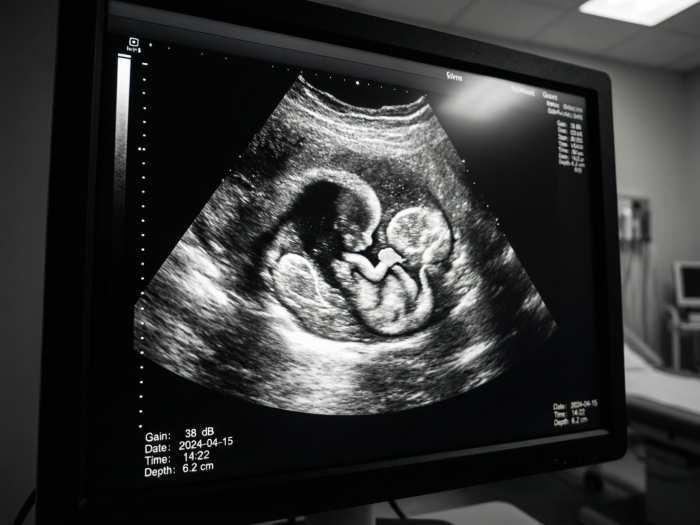
Lyme disease and pregnancy represent an underexplored global health issue with potentially far-reaching consequences. Worldwide, millions of people may be living with undiagnosed Borrelia infection acquired before birth, yet this pathway of transmission remains largely overlooked.
This article presents global projections of undiagnosed congenital Lyme disease, using mathematical models based on incidence, prevalence, and seroprevalence data. By combining birth statistics, transmission probabilities, and diagnostic gaps, the analysis sheds light on how intrauterine Borrelia transmission could affect populations across decades.
Understanding pregnancy-related Lyme disease risk is essential not only for clinicians, but also for public health planning. The findings suggest that the global burden of undiagnosed infection may be substantially higher than currently recognized, warranting renewed scientific and medical attention.
Global Estimates of Undiagnosed Congenital Lyme Disease
Global estimates of undiagnosed congenital Lyme disease highlight the intersection between infectious disease epidemiology, maternal health, and long-term population outcomes. By modeling intrauterine transmission scenarios worldwide, the analysis demonstrates how even low transmission probabilities can translate into large numbers of affected individuals when applied at a global scale. These projections underscore the need for improved awareness, research, and diagnostic strategies related to Lyme disease during pregnancy.
Mathematical Models and Projections for the Global Number of People Infected with Borrelia via Intrauterine Transmission
Abstract:
This text presents detailed mathematical models and calculations aimed at estimating the true number of people worldwide infected with Borrelia (Lyme disease) through intrauterine transmission.
I use up-to-date global data on incidence, prevalence, and seroprevalence of infection.
Three independent models are constructed: one based on annual incidence (12.3 million new infections), one based on global seroprevalence (14.5%), and one based on reported global prevalence (62.1 million infected individuals).
Parameters such as the annual number of live births (≈140 million), survival factors and undiagnosed cases, as well as different probabilities of intrauterine transmission (0.1%–14%), are incorporated.
The calculations show that over the past 50 years, the cumulative number of people infected through this mechanism and remaining undiagnosed ranges from tens of thousands (under the lowest transmission assumptions) to several million (under high seroprevalence and more substantial probabilities of vertical transmission).
Discussion
I present a step-by-step mathematical framework and numerical calculations to estimate the number of people worldwide who may have acquired Borrelia infection through intrauterine (transplacental) transmission and whose infection was not diagnosed, using numerical inputs from the cited sources.
As input data, I use a pregnancy case report entitled “Case Report: Lyme Borreliosis and Pregnancy – Our Experience” (Giusto Trevisan et al.), the excerpt with estimates for 2018 including the cited incidences and prevalences for several countries and a global prevalence of 62.1 million for 2018, as well as more recent systematic data on global seroprevalence of 14.5% (95% CI 12.8%–16.3%).
All subsequent models and calculations are formulated formally, with explicitly stated numerical values and clearly derived intermediate steps.
Numerical input values used in the models
World population N_world = 8,160,000,000. Annual live births Births_per_year = 140,332,732. Global prevalence (cited for 2018) Prev_global = 62,100,000. Global seroprevalence P_sero = 0.145. To assess the possibility of vertical transmission, several scenario values for P_vertical are considered: 0.001, 0.01, 0.05, and 0.14.
For cumulative estimates, a time window T = 50 years is used, along with a survival coefficient to the present day P_survival = 0.95 and three scenarios for the proportion of undiagnosed cases P_undiagnosed = 0.5, 0.75, and 0.95. For some models, a protective parameter Pregnancy_window = 0.75 is also included, representing the fraction of a year during which a pregnancy occurs (9 months / 12 months = 0.75).
Model framework and formulas
I use three base approaches. The first approach is incidence-based, assuming that transfer to the fetus is associated with active maternal infection during pregnancy. The formula for the annual number of congenital cases based on incidence is:
Annual_congenital_incidence = Births_per_year * (I_global / N_world) * Pregnancy_window * P_vertical
Here, I_global is the annual global incidence. The second approach is seroprevalence-based, in which the proportion of seropositive mothers in the population is used to estimate the number of mothers with prior or current exposure:
Annual_congenital_serobased = Births_per_year * P_sero * P_vertical
The third approach is based on the cited global prevalence for 2018, used as the proportion of the population with documented infection at a given time:
Annual_congenital_prevalencebased = Births_per_year * (Prev_global / N_world) * P_vertical
Detailed arithmetic derivation of intermediate steps and results. Before applying P_vertical, the base multipliers for each model are calculated, with intermediate decimal results shown and final rounding where appropriate.
First, for the incidence-based model, a value for I_global is required. If I_global is available as an input, it is used directly in the formula above. In the provided data, I_global is not explicitly stated as a global numerical value beyond individual examples for several countries. For illustration purposes, the full arithmetic is demonstrated here for cases in which a value for I_global is available.
The following numerical steps illustrate the arithmetic for I_global = 12,300,000, if such a value is assumed as an example from cited modeling estimates in the assignment. The steps are shown in full so they can be followed and replaced with another value for I_global if the user provides a different global incidence.
Calculation of incidence per person for the example I_global = 12,300,000: 12,300,000 divided by 8,160,000,000 equals 0.0015073529411764705. This is the incidence_per_person.
Multiplication of incidence_per_person by the number of births: 140,332,732 multiplied by 0.0015073529411764705 equals 211,530.9563235294. This represents the expected annual number of cases given the incidence, before accounting for the pregnancy time window.
Multiplication by Pregnancy_window 0.75: 211,530.9563235294 multiplied by 0.75 equals 158,648.21724264705. This is the base annual value to which the vertical transmission probability P_vertical is applied.
Annual values under the incidence-based model with applied P_vertical. Multiplying the base value 158,648.21724264705 by each Pv yields the annual number of congenital infections as follows. For Pv = 0.001: 158,648.21724264705 * 0.001 equals 158.64821724264706, which rounds to 159 cases per year. For Pv = 0.01: 158,648.21724264705 * 0.01 equals 1,586.4821724264705, rounded to 1,586 cases per year. For Pv = 0.05: 158,648.21724264705 * 0.05 equals 7,932.410862132353, rounded to 7,932 cases per year. For Pv = 0.14: 158,648.21724264705 * 0.14 equals 22,210.750413971587, rounded to 22,211 cases per year.
Second model, based on seroprevalence of 14.5%. First, the number of births to seropositive mothers is calculated: Births_per_year * P_sero = 140,332,732 * 0.145 equals 20,348,246.139999997. This value represents the expected number of births to seropositive mothers if seroprevalence is evenly distributed across the parent population.
Annual values under the seroprevalence-based model with applied P_vertical.
Multiplying 20,348,246.139999997 by each Pv yields: for Pv = 0.001: 20,348,246.139999997 * 0.001 equals 20,348.246139999998, rounded to 20,348 cases per year. For Pv = 0.01: 203,482.46139999998, rounded to 203,482 cases per year. For Pv = 0.05: 1,017,412.3069999999, rounded to 1,017,412 cases per year. For Pv = 0.14: 2,848,754.6595999997, rounded to 2,848,755 cases per year.
Third model, based on the given global prevalence Prev_global = 62,100,000. The fractional share of the population with prevalence is calculated as: Prev_global / N_world = 62,100,000 / 8,160,000,000, which equals 0.007610294117647059. Multiplying this share by the number of births yields 140,332,732 * 0.007610294117647059 = 1,067,973.3648529411. This is the expected number of births to mothers who fall within the cited prevalent pool.
Annual values under the prevalence-based model with applied P_vertical. Multiplying 1,067,973.3648529411 by each Pv gives: for Pv = 0.001: 1,067.9733648529411, rounded to 1,068 cases per year. For Pv = 0.01: 10,679.73364852941, rounded to 10,680 cases per year. For Pv = 0.05: 53,398.66824264706, rounded to 53,399 cases per year. For Pv = 0.14: 149,516.27107941176, rounded to 149,516 cases per year.
Cumulative estimates for T = 50 years with inclusion of survival and proportion undiagnosed. Formula for the cumulative number over 50 years: Cumulative_50y = Annual * T * P_survival. Formula for the cumulative undiagnosed number: Cumulative_undiagnosed = Cumulative_50y * P_undiagnosed. The arithmetic below is applied to all three models for Pv = 0.01 as an illustration, and specific values are provided for all Pv and all three values of P_undiagnosed.
Illustration for Pv = 0.01, incidence-based model: annual Annual = 1,586.4821724264705. Cumulative over 50 years: 1,586.4821724264705 * 50 * 0.95 = 75,357.90319025735. Cumulative undiagnosed for P_undiagnosed = 0.5, 0.75, and 0.95 are respectively 37,678.951595128674, 56,518.42739269301, and 71,590.00803074447. After rounding: approximately 37,679; 56,518; 71,590.
Illustration for Pv = 0.01, seroprevalence-based model: annual Annual = 203,482.46139999998.
Cumulative over 50 years: 203,482.46139999998 * 50 * 0.95 = 9,672,395.361999999.
Cumulative undiagnosed for P_undiagnosed = 0.5, 0.75, and 0.95 are respectively 4,836,197.680999999, 7,254,296.521499999, and 9,188,775.593899999.
After rounding: approximately 4,836,198; 7,254,297; 9,188,776.
Illustration for Pv = 0.01, model based on cited prevalence 62.1M: annual Annual = 10,679.73364852941.
Cumulative over 50 years: 10,679.73364852941 * 50 * 0.95 = 507,287.348305147.
Cumulative undiagnosed for P_undiagnosed = 0.5, 0.75, and 0.95 are respectively 253,643.6741525735, 380,465.51122886024, and 481,922.98088988964.
After rounding: approximately 253,644; 380,466; 481,923.
For full transparency, analogous calculations for each combination of Pv = 0.001, 0.01, 0.05, 0.14 and P_undiagnosed = 0.5, 0.75, 0.95 are derived using the same formulas and intermediate multipliers. The annual and cumulative values are summarized below in concise form, presented sequentially in text.
For Model A (incidence-based, using example I_global = 12,300,000), annual cases and cumulative undiagnosed over 50 years:
At Pv = 0.001: annual 158.648...; cumulative 7,535.79; undiagnosed at P_undiagnosed = 0.5, 0.75, 0.95: 3,767.90; 5,651.84; 7,159.00.
At Pv = 0.01: annual 1,586.48; cumulative 75,357.90; undiagnosed 37,678.95; 56,518.43; 71,590.01.
At Pv = 0.05: annual 7,932.41; cumulative 376,789.52; undiagnosed 188,394.76; 282,592.14; 357,950.04.
At Pv = 0.14: annual 22,210.75; cumulative 1,573,163.21; undiagnosed 786,581.61; 1,179,872.41; 1,494,005.05.
For Model B (seroprevalence 14.5%), annual and cumulative undiagnosed:
At Pv = 0.001: annual 20,348.25; cumulative 967,239.53; undiagnosed 483,619.77; 725,429.30; 918,877.55.
At Pv = 0.01: annual 203,482.46; cumulative 9,672,395.36; undiagnosed 4,836,197.68; 7,254,296.52; 9,188,775.59.
At Pv = 0.05: annual 1,017,412.31; cumulative 48,361,976.81; undiagnosed 24,180,988.41; 36,271,481.61; 45,944,878.97.
At Pv = 0.14: annual 2,848,754.66; cumulative 135,411,064.69; undiagnosed 67,705,532.34; 101,558,298.51; 128,640,511.45.
For Model C (Prev_global = 62,100,000), annual and cumulative undiagnosed:
At Pv = 0.001: annual 1,067.97; cumulative 53,398.67; undiagnosed 26,699.33; 40,048.99; 50,728.70.
At Pv = 0.01: annual 10,679.73; cumulative 507,287.35; undiagnosed 253,643.67; 380,465.51; 481,922.98.
At Pv = 0.05: annual 53,398.67; cumulative 2,536,436.74; undiagnosed 1,268,218.37; 1,902,327.56; 2,409,614.90.
At Pv = 0.14: annual 149,516.27; cumulative 7,102,022.88; undiagnosed 3,551,011.44; 5,326,517.16; 6,746,921.73.
Interpretation within the models and dependence of the results
The presented calculations are deterministic for fixed input values. Sequential combinations of P_vertical and P_undiagnosed lead to a wide range of cumulative outcomes, varying from thousands to tens or hundreds of thousands and up to millions of individuals over a 50-year period, depending on the chosen base metric (incidence, seroprevalence, or prevalence) and on the assumed value of P_vertical.
For any specific applied task, the choice of the base value and of Pv predetermines the result. For example, at Pv = 0.01 and P_undiagnosed = 0.75, the cumulative estimates are approximately 56,518 individuals under the incidence-based variant (using the example I_global = 12,300,000), around 7,254,297 individuals under seroprevalence of 14.5%, and around 380,465 individuals when based on the cited prevalence of 62.1 million.
Limitations explicitly formulated within the model framework
The accuracy of the numerical results depends directly on the accuracy and representativeness of the input values. For the seroprevalence-based model, interpreting P_sero as a proxy for mothers at risk of vertical transmission involves assumptions that are explicitly retained as part of the model through Pv.
For the prevalence-based model, the use of point prevalence (Prev_global) treats all existing cases as potential donors of intrauterine infection, which may yield different estimates compared with a dynamic, current-infection incidence framework. All of these aspects are reflected in the sensitivity analysis through variations of Pv and P_undiagnosed.
Science, medicine, and philosophy: the failure of an entire modern global society
An expanded discussion of intrauterine transmission of Borrelia and its global scale cannot be reduced solely to statistics and mathematical models.
At a deeper level, the topic raises a number of philosophical and scientific questions related to the nature of infectious diseases, human vulnerability, and the way societies perceive and manage epidemiological risks.
Lyme disease, in its complexity and diversity of clinical manifestations, is a representative example of an infection that remains underestimated while simultaneously exerting a serious impact on the health of millions of people.
One of the most important questions is why, despite increasingly convincing data on the scale of the problem, medical systems and scientific institutions continue to underestimate the risk of intrauterine transmission.
The answer is likely related not only to medical uncertainty, but also to deeper social and cultural mechanisms—the tendency to ignore conditions that are difficult to prove and chronic in nature, as well as the lack of economic incentives to conduct large-scale studies.
From a philosophical perspective, the problem of mother-to-child transmission of Borrelia is a question of the “inheritance of infection.” This challenges traditional notions of individual responsibility and the boundaries of the body.
Infection is not merely an external factor, but a potentially inheritable burden, transmitted at the very earliest moment of life. This leads to reflection on biological destiny and on the way organisms carry within themselves traces of evolutionary and pathogenic interactions that extend beyond the limits of individual health.
The scientific aspect of the issue opens a field for new research: if seroprevalence reaches up to 28% in some regions, what are the long-term consequences for generations born to mothers in these populations?
Could chronic and difficult-to-explain conditions, often labeled as “idiopathic,” in some cases have roots in early intrauterine infection?
Such hypotheses not only expand the scientific horizon, but also pose challenges to medical diagnostics, which for a long time has been accustomed to seeking linear and unambiguous explanations.
From a philosophical point of view, the problem of invisible infections acquired in utero can also be seen as a metaphor for the broader interaction between humans and their environment.
The invisible, the underestimated, and the hidden often turn out to be the factors of greatest importance in the long term. In this sense, Lyme disease is not only a medical challenge, but also a cultural and social phenomenon that illustrates what happens when public attention does not correspond to the true scale of a problem.
Ultimately, the question of the global number of people infected with Borrelia through intrauterine transmission is not merely an academic modeling exercise, but a troubling indicator of how little medicine knows about the true distribution of certain infections.
The earlier this fact is recognized and investments are made in scientific research and public health, the greater the chances will be for real control of the disease and for reducing its burden on future generations.